Loading ...
Proper firearm maintenance protects reliability, accuracy, and long-term value. A well-maintained firearm functions as intended, lasts longer, and remains safer to handle. Neglecting cleaning and storage can lead to malfunctions, corrosion, and unnecessary wear.
This guide covers the fundamentals of firearm cleaning and storage in a clear, practical way, helping firearm owners build habits that support performance and safety.
Every time a firearm is used, residue builds up. Carbon, unburned powder, copper fouling, and moisture slowly affect internal components. Over time, this buildup can interfere with cycling, accuracy, and trigger function.
Routine maintenance helps:
Cleaning is not about perfection. It is about consistency and awareness.
Cleaning frequency depends on use, environment, and firearm type.
General guidelines include:
Firearms stored for defense benefit from inspection and light maintenance on a regular schedule.
Before cleaning or handling, safety steps must come first every time.
Never skip this step. Safe handling habits protect you and those around you.
You do not need excessive tools to clean a firearm effectively. Quality basics work well across most platforms.
Avoid household cleaners. Firearms require products designed for metal finishes and internal components.
Follow the manufacturer’s instructions to field strip the firearm. Field stripping usually involves separating the slide, barrel, frame, or bolt assembly.
Only disassemble as far as recommended. Deep disassembly without training can cause issues during reassembly.
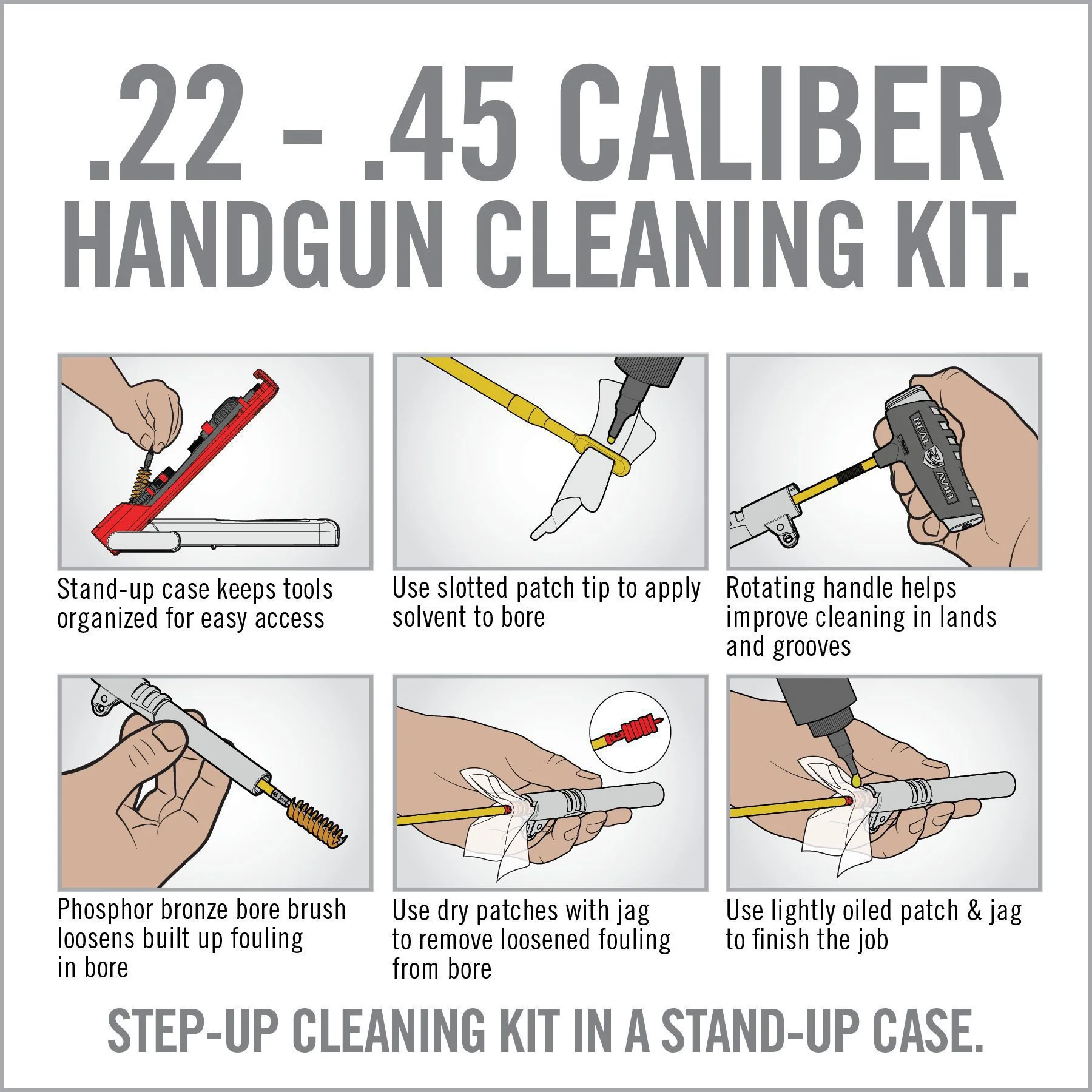
The barrel experiences the most fouling.
Steps include:
Always clean in the direction the bullet travels when possible.
Carbon buildup collects in the action and moving parts.
Focus on:
Use a brush and solvent sparingly. Wipe away loosened residue with a clean cloth or patch.
External metal surfaces attract moisture from handling.
This step helps prevent surface rust and wear.
Lubrication supports smooth operation.
Key points:
Too much oil attracts debris and can interfere with function.
Once cleaning is complete:
Function checks confirm proper reassembly and readiness.
Handguns benefit from regular attention due to compact tolerances.
Pay attention to:
Magazines should be cleaned periodically, especially if dropped during training.
Rifles may require additional care based on use.
Consider:
Precision rifles benefit from consistent barrel maintenance routines.
Shotguns often face moisture exposure.
Key areas include:
Light oil protects internal components without causing buildup.
Storage matters as much as cleaning. Improper storage can undo careful maintenance.
Firearms should be stored securely to prevent unauthorized access.
Options include:
Choose storage that balances security and accessibility based on household needs.
Moisture is the enemy of firearms.
Best practices include:
Stable conditions protect metal and wood components.
For extended storage:
Avoid storing firearms in soft cases long-term, as they can trap moisture.
Ammunition storage also matters.
Guidelines include:
Properly stored ammunition remains reliable for many years.
Simple habits prevent most issues.
Consistency matters more than complexity.
A practical routine includes:
Routine care builds familiarity and confidence.
Firearm maintenance is a responsibility that supports safety, reliability, and long-term performance. Cleaning and storage do not require advanced tools or excessive time. They require attention, consistency, and respect for the equipment.
A well-maintained firearm reflects responsible ownership. When care becomes habit, reliability follows.